Showing posts with label procecssor. Show all posts

Thursday, August 07, 2008

Intel atom processor performance review


Intel atom is the new processor from Intel specially manufactured for mobile internet devices(MIDs). Previously codenamed Silverthorne and Diamondville, it is now given the new name atom. Major fields of application include Smartphones and ultramobile PCs which
are of relatively smaller size. The mobile technology which incorporates this processor is called Centrino Atom. Actually this is the first X86, a bit old I have to say, based processor after Intel Pentium.

At the cost of speed, Intel has made significant improvements in power consumption and cost. Average battery life is significantly extended by decreasing idle powen consumption. In short, Intel Atom processors are aimed at devices which need smallest power consumption as their primary feature. Power consumption problems had always been there with all intel mobile processors and this is not the first attempt to rectify it. But now Intel has significantly improved, if their technicalclaims are going to be true.

  • Having two versions, silverthorne will be called the Atom Z series and Diamondville will be called the Atom N series, according to Intel. Intel and Lenovo jointly announced new IdeaPad series notebooks based on Atom processor.
  • Intel atom is a 45 nm processor.
  • Intel is having a series of of competiters in the field. The major ones are Nvidia Tegra based line of processors for MIDs and the mobile platforms like Puma from AMD. Tegra is claimed to have more processing efficiency than Intel atom processor.
  • Intel has also announced the next generation atom processors based on Lincroft Architecture. It is codenamed Pineview. Intel will officially launch it in 2009.

Intel atom processor review

Tuesday, July 15, 2008

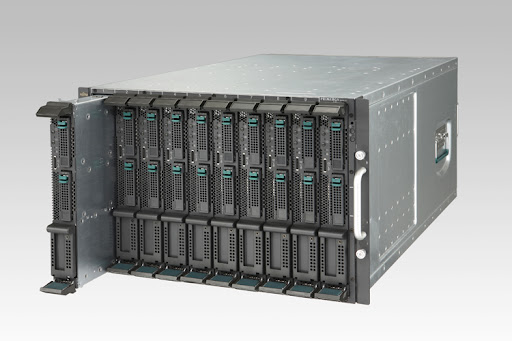
What is Blade computing and Blade server?

A Blade server is a server chassis containing server computers called server blades which are designed for high performance in less storage space. The difference between ordinary rack mount servers and blade servers is that all the power needs of the entire system is provided by the chassis as one single unit thereby eliminating the need for separate power cords for each server maintained. Other cable requirements are also eliminated. Thus a blade server saves space, which is a significant factor in modern computing era.

The consolidation of power supplies also reduces the total power consumption since individual power supplies to each server is not required. All the resources are centralized which results in lower management cost.It is easy to upgrade and add new servers. All that is needed is to slide the new servers into chassis space.

Each server blades contain 1 to 4 processors with ample memory racked in the blade chassis. One can also add additional memory modules outside the system. The entire system can be centralized by removing memory modules from server blades and adding one single external memory module. This can eliminate data redundancies too.

Server management tools and virtualization software comes in the software part which enables the server administration and ensures proper and maximum server utilisation.
Saturday, July 12, 2008

Intel Centrino 2, next generation mobile technology

The anticipated Intel Centrino 2 is finally on market. A project previously codenamed Montevina is now officially named Centrino 2 by intel. It is the first mobile platform on market based on Intel's latest Penryn CPUS. is, the Intel Centrino 2 is based on the advanced 45 nm technology which is a significant improvement from the old 65 nm chips.


The CPU speed will be ranging from 2.4Ghz to 2.8 Ghz.Other features are support for DDR3 ram ,
802.11n and WiMAX. The Centrino 2 is said to be a big improvement while battery life and heat dissipation is concerned.It will run on 25 watt power rather than 35 of older ones.